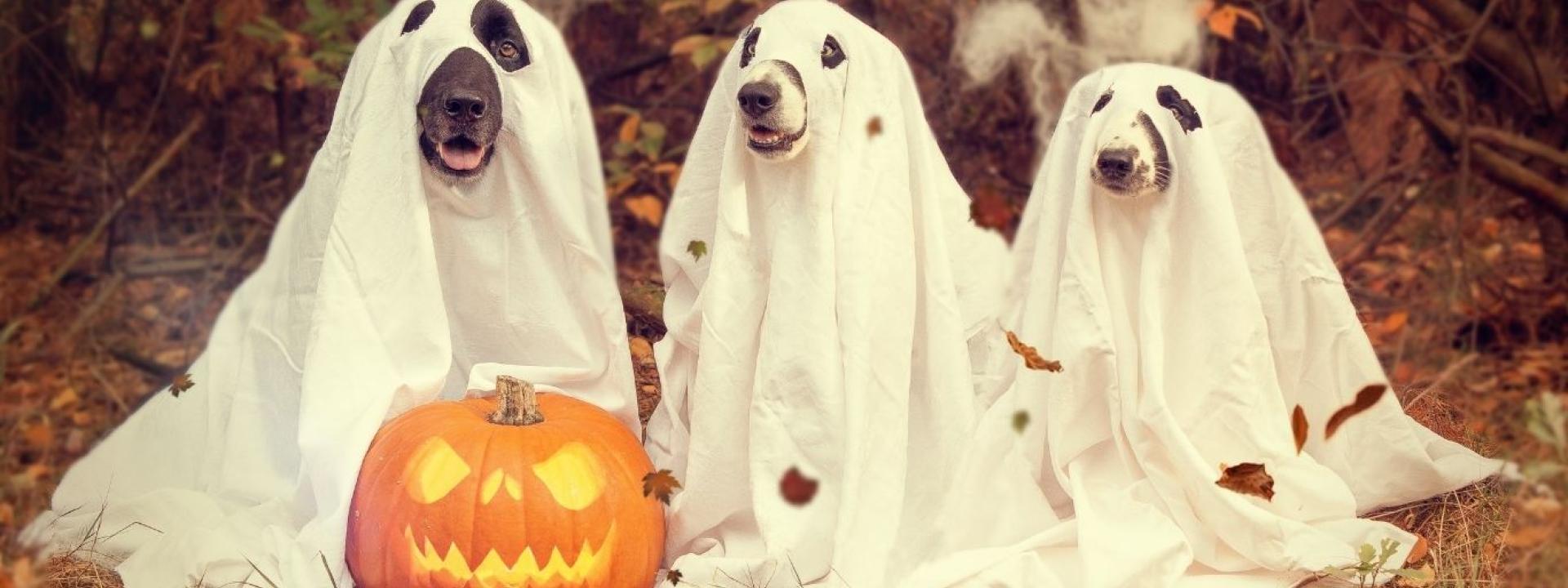
A dog discovers a dropped candy bar during the school costume parade. A cat bats at a ribbon dangling from a pumpkin display. Neither moment looks dramatic, yet both can create a veterinary concern. At Coolidge Veterinary Hospital, our favorite Halloween advice is practical: look for the everyday opportunities pets have to get into things, then remove those opportunities before the celebration starts.
Think about where the treats travel
Candy does not remain neatly in one bowl. It moves from grocery bags to pantry shelves, into costume pockets, onto car seats, and finally into children's bedrooms. Each stop creates a new chance for a curious pet to investigate. Make a family rule that treats are opened and sorted at a table away from animals, then transferred into containers with secure lids. Empty wrappers belong in a covered trash can, not an open wastebasket.
Ask children not to share snacks with pets, even if the pet begs. Explain that a food safe for people may be dangerous for dogs. The goal is not to frighten anyone; it is to give every family member one simple rule they can remember.
Know which ingredients change the urgency
Chocolate contains methylxanthines that dogs and cats process differently than people. The darker and more concentrated the chocolate, the greater the potential danger per ounce. A pet's weight, the product, and the quantity all matter. Vomiting, agitation, fast breathing, an abnormal heartbeat, tremors, and seizures are possible signs. A veterinarian should assess suspected chocolate ingestion rather than having owners estimate safety from symptoms alone.
Some sugar-free products use xylitol, also called birch sugar. For dogs, it can cause a rapid and severe decrease in blood sugar and sometimes liver damage. Because ingredient lists vary between brands, keep the wrapper for your veterinary team. Raisins and grapes, including those hidden inside trail mix or baked treats, may damage a dog's kidneys. There is no reliable harmless amount for every dog.
Large amounts of rich or fatty candy may also lead to digestive upset or pancreatitis, even when the ingredients are not classically poisonous. Candy wrappers, sticks, and plastic packaging introduce a separate risk: intestinal blockage. An animal that seems fine immediately after swallowing packaging may become sick later.
A safe porch is more than a tidy porch
Outdoor displays should not create places where a pet can chew electrical cords, swallow artificial cobwebs, or knock over objects. Put extension cords behind barriers. Avoid leaving small plastic decorations at ground level. Carved pumpkins are charming, but open flames are a burn and fire hazard; battery-powered lights are a safer choice.
Glow bracelets and necklaces often end up on the ground after dark. Their liquid can cause sudden drooling and mouth discomfort when bitten. The plastic casing can be another problem if swallowed. Pick up discarded glow items before pets go outside and contact a veterinarian if exposure occurs.
Pay attention to the animals that dislike crowds
Some dogs greet everyone enthusiastically. Others find repeated knocking, masks, and noisy groups exhausting. Cats may prefer to disappear until the house is quiet. Respect those preferences. Prepare an indoor retreat with water, a litter box for cats, familiar bedding, and a place to hide. Keep guests and children from repeatedly entering the room to check on the animal.
If you plan to dress your pet, test the outfit on an ordinary day. Remove it if your pet pants excessively, refuses to move, or tries to chew it off. Costumes should have no dangling parts or restrictive straps. A comfortable pet matters far more than a perfect photograph.
Plan for the unexpected open door
Halloween increases the number of times an entrance is opened. Before sunset, check gates, latches, identification tags, and microchip information. Keep pets behind a closed interior door or another secure barrier while distributing treats. Use a leash for outdoor potty breaks, even if your dog usually stays nearby. A sudden noise or unfamiliar costume can cause a quick escape.
For pets already nervous about visitors, consider taking an earlier walk and offering enrichment before trick-or-treating begins. Never force a frightened animal to interact with someone in a mask.
What to do when something has been eaten
First, prevent your pet from swallowing more. Find the product label, estimate the amount missing, and record the approximate time. Call a veterinary professional right away for guidance, especially for chocolate, xylitol, raisins, or suspected foreign objects. Do not attempt to make your pet vomit unless instructed. Home remedies can delay treatment or create additional injury.
If your pet has difficulty breathing, collapses, develops seizures, or shows severe weakness, seek emergency care immediately. Coolidge Veterinary Hospital can assist with routine veterinary questions and evaluation during operating hours. When an emergency occurs outside available services, go directly to an emergency veterinary hospital.
Make cleanup part of the holiday
The morning after, check under furniture, along sidewalks, and around the porch for candy, glow sticks, and broken decorations. Throw away pumpkin pieces that have become moldy or are mixed with candle wax. A short cleanup can prevent an entirely avoidable veterinary visit. Halloween does not require an elaborate pet-proofing system. It requires noticing the ordinary places where holiday excitement leaves tempting objects behind.
Remember that Halloween extends beyond your front yard
If you take your dog on an evening walk, watch the ground carefully. Discarded candy, snack bags, and glow bracelets can collect near sidewalks and gathering places. Keep your dog close enough that you can redirect sniffing before something is swallowed. Bring a flashlight so you can see what your pet is investigating, and avoid retractable leashes in crowded areas where quick control may be necessary.
Pets riding in the car should be secured appropriately rather than roaming between seats and candy bags. If you visit friends, ask where their candy and decorations are stored before letting your pet explore. A home that is safe for one family's animals may contain unfamiliar hazards for yours.
Finally, check on pets that spend time outdoors. Unusual traffic, noise, and visitors can cause stress. Bringing them inside for the evening is often the simplest way to reduce avoidable risk.